The wheat and the tares

What even are tares? I had to look this up and found out that tares or darnel look very like wheat seeds but are actually poisonous.

Recently I was thinking about this parable while mulling over a decision I made a number of years ago when I could not see a way forward with one of my children and asked a good friend to help. What I asked of my friend was quite a big ask but I really at that point did not see what else I could do.

My friend said yes. Everything seemed to go well at the start, but then my friend had unforeseen stresses and responsibilities in her own life and had to bail out. I completely understood why and looked for someone else. In the end we got help from strangers which wasn’t easy, but it worked out.

All’s well that ends well, you might say, but it’s quite so simple. My asking something of my friend just before what was to turn out to be a difficult period in her life, has affected our friendship although I will always be grateful to her for being willing to try. Good has come out of this, but people were also hurt on all sides and these effects don’t go away even if you forgive each other.

I’ve been turning this situation over in my mind and thinking, what else could I have done, what should I have done? If I had known what my friend was going to go through, I would never have asked her to help us and if she had known, I’m quite sure she would not have said ‘Yes’.

Hindsight is a great thing and yet even with hindsight nothing is clear. I still don’t see that there were a lot of other options at the time, and much good eventually came out of this even if there was also hurt on all sides.

Photo by Pixabay on Pexels.com

I was mulling over this for several days, wondering what I should have done, and also, since I am only human, trying to apportion blame or exonerate, when the parable of the wheat and the tares came up in the daily reading. I have never understood this parable and have always found the image of the tares being taken into the furnace and burnt very frightening. I was brought up on hell, fire and judgement sermons and this parable has usually triggered fear and painful memories.

This time, however, as I listened to the parable on the Jesuit Pray as You Go App, it seemed to say something different. It seemed that Christ was saying that because I am an imperfect person in a flawed world, there will always be wheat and tares in every situation. Nothing is pure and unadulterated and to seek or expect perfection is to chase a mirage.

And yet, is there another side to this? Is it possible that everything can be redeemed? Is the parable of the tares telling us that at the end of time all that is imperfect and painful in a situation or relationship will be gathered up and burnt away leaving only the pure gold of love?

I don’t know and am hardly able to even imagine how the pain in this and other situations which I perceive as difficult could be burnt away, and yet I recognise that even where I have hurt others or where I feel that they have let me down or hurt me, there is still, under all the layers of blame and counter-blame, love.

Another thing I have been struggling with recently is suicide bereavement. It seems that this type of bereavement is like a burn which is shocking and sharply painful when it happens, and which can burn deeper and deeper into the skin as time goes on. The initial shock and grief of bereavement is long over, but I am still becoming aware of the ongoing and deep effects of this type of wound.

There has been a physical effect. In the four years since my sister took her life, many members of my family, including myself, have developed chronic health conditions.

There is a mental effect. I have struggled with numbness and sometimes still feel that I am fumbling through life half-frozen. There are days when I find it difficult to focus on anything. There are still times when I feel caught in that awful moment when my sister was dying. My anxiety can be high. The worst in a sense has happened. Who is to say it won’t happen again?

There is a spiritual effect. This is harder to reckon or describe. My best attempt is to say that it’s not so much that I have no hope, but that it’s hard to feel any hope.

All this has been brought to the fore by my nephew, my sister’s son, being hospitalised because of his own struggles with mental illness. It’s hard for us to have hope. We only see our helplessness, our inability, despite our love for his mother, to prevent a tragedy. We no longer have hope in ourselves. Institutions like the government and the NHS have let us down. What grounds do we have for hope?

Going beyond my own feelings, I recognise that my family’s suffering is by no means unique. There are many apparently hopeless situations in this world from other families bereaved in tragic circumstances to complex, political and human messes, like the situation in Palestine. I hope, even though there is, from a purely human point of view, no reason to hope. You could say that hope is illogical, but I choose it. I choose to acknowledge my smallness, do the little things I can do, and hand the rest over to God.

Perhaps even in this situation, which seems to be all tares, there are a few stalks of wheat growing. Recently I saw a tree growing in the cleft of a rock. It was growing in a harsh environment but it was still there. Is hope like that?

For those reading this blog post, please say a prayer for my nephew. Even if you are not sure you believe in prayer, please send some thoughts of love and hope. Thank you.
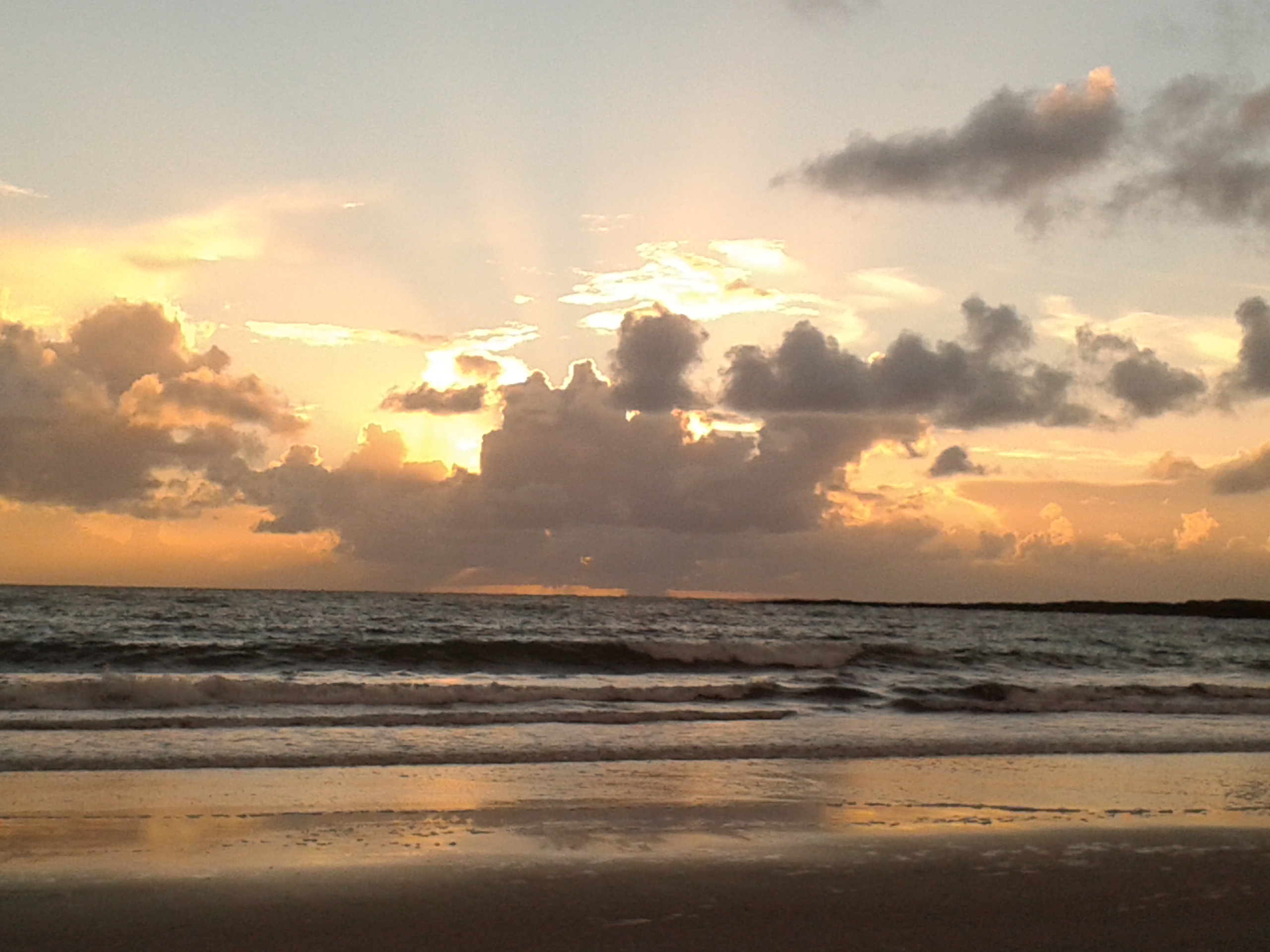
A huge task

20180808_210556

I am thinking a lot about the warning issued earlier this week by the Intergovernmental Panel on Climate Change (IPCC) to act NOW on climate change. There is only a short time left to put measures into place avoid the worst effects of climate change. We have already caused a 1 °C temperature rise over pre-industrial levels. It’s still possible to limit the global mean temperature rise to 1.5 °C, but this requires a radical cut in carbon emissions of 45 % over the next 12 years. In other words, this requires a huge change in the way we use transport, heat and light our homes and produce our food.

If we drag our feet on cutting emissions then the mean global temperature rise will reach or exceed 2 °C, dramatically increasing the risk of weather-related disasters, such as floods, droughts and extreme heat. The effects of a 2 °C rise would be devastating. Only 1 % of corals would survive and insects, which are essential for pollinating our food, would lose 50 % of their habitat.

Some people will see this warning as over-dramatic. Others might sense a conspiracy: are the scientists playing a political game?

Are these scientists for real?

I am taking this warning to heart because I was a climate scientist, before giving up work to bring up my children. I’ve worked in three different countries and three different organisations which were involved in monitoring the climate. This work brought me the privilege of meeting many dedicated climate scientists, some of whom contributed to previous IPCC reports.

I’ve sat through seminars and lectures where people have presented model scenarios. They put in the best knowledge about the present climate and carbon emissions and run their models to see what happens in the future. What happens if we stick our head in the sand and do nothing? What happens if we cut emissions by 50 %, 75 %, and so on?

I learnt that what might seem to the layman to be small rises in global mean temperature of a few degrees centigrade can have huge effects. Some areas, such as the Arctic, will experience mean temperature rises of 4 to 5 °C, causing melting of sea ice and rising sea levels. Increased temperature also means more evaporation, which means more rain and greater risk of floods.

As a scientist, I’ve been involved in making careful measurements of atmospheric gases and have seen how they changed over time in response to the changing climate. My work has also gone through a rigorous peer review process. Nothing can get published in a scientific journal without being reviewed and criticised by at least three anonymous reviewers. They will point out any holes in your arguments and there’s no way you can slip in any assertions without providing solid evidence.

Believe me, the IPCC report and the scientific studies it is based on, are not fantasy or wild guesses. They represent our absolute, best estimate of what will happen in the near-future based on accurate current measurements.

Is there still time?

In the 1990’s, when I began working in this field, there was still time. The dire scenarios predicted for the mid 21st century seemed a long time away, but now they are a lot closer.

What the latest IPCC report is saying is that time is almost running out. There’s no time left to argue. We have to act now.

Hope?

I’ve been feeling really low. In fact, I’ve felt hopeless and overwhelmed. If politicians won’t act, how can my small choices to grow my own potatoes and vegetables or to walk or cycle instead of using a car, make any difference?

And it isn’t enough for a few small nations to act on climate change. This has to be a concerted effort. We must recognise our common humanity and responsibility for the planet. The warning is stark. There’s no part of this planet which won’t be affected by climate change.

Through my daughter’s illness, I have been going through my own test of faith and hope. Recently, someone passed on this quote by the Scottish author, Robert-Louis Stevenson:

To travel hopefully is better than to arrive, and the true success is the labour.

Hope doesn’t know the outcome. Hope doesn’t ignore the difficulties. If it was easy and the way was clear, we wouldn’t need hope.

To save our climate, we must travel hopefully

What about faith?

The Presbyterian group I grew up in was suspicious of movements to protect the environment. They saw these efforts as potentially stabilising the ‘God-given’ status quo. The evangelicals I met at university seemed indifferent to environmental issues. Why make an effort to save the climate if the world was going to be destroyed anyway in Armageddon and God was going to give us a new one?

As I learnt about the threat of climate change on my science course, I wondered why God would give us a new heaven and a new earth, if we haven’t taken good care of this one? He’d be like a parent who buys a new expensive toy for their child after they’ve trashed the first one.

At the same time, I met atheist friends who were passionate about climate and social justice issues. This was a factor, although by no means the only one, in drifting away from religion.

Having come back to Christianity, I was very happy that Pope Francis published Laudato Si, his encyclical on the earth, our common home. This signals a change in the church’s attitude, from seeing us as caretakers rather than exploiters of the planet.

Scottish Catholic organisations, such as SCIAF and Justice and Peace Scotland are campaigning against climate change, because it as a social justice issue. Acting to limit climate change is a matter of justice for people living on the margins: on low lying islands, in dry areas where crops often fail, in areas prone to flooding, as well as for our children and future generations.

It is a huge task. As individuals we are small and weak, but God works through our weakness.

I’ll give the last words to Gordon MacIntyre-Kemp, who writes about the economy in The National, a Scottish newspaper. He points out that action on climate change, requires a whole new way of living and a new economic model:

“Our economic system cannot survive unless the population work hard to buy things they do not need and cannot afford….The existential crisis of our age is that we are killing the planet to consume goods we don’t need and that often make us miserable because we borrowed to buy them.”